How Boutique Senior Care Homes Improve Activities of Daily Living
Business Name: BeeHive Homes of Taylor Ranch
Address: 6004 Whiteman Dr NW, Albuquerque, NM 87120
Phone: (505) 302-1919
BeeHive Homes of Taylor Ranch
At BeeHive Homes of Taylor Ranch, New Mexico, we offer the finest assisted living experience available in a cozy, comfortable homelike setting. Each of our residents has their own spacious room with an ADA approved bathroom and shower. We prepare and serve delicious home-cooked meals three times a day every day. We maintain a small, friendly elderly care community. We provide regular activities that our residents find fun and contribute to their health and well-being. Our staff is attentive and caring and provides assistance with daily activities to our senior living residents in a loving and respectful manner. We would like to invite you to tour and experience our assisted living home and feel the difference.
6004 Whiteman Dr NW, Albuquerque, NM 87120
Business Hours
Families rarely begin researching care choices since whatever is working out. Normally there has actually been a fall, a frightening minute with medication, or a sluggish accumulation of small concerns that finally feels like excessive. In those conversations, the exact same concerns turn up: Will Mom still have the ability to shower safely? Who will ensure Dad is eating real meals, not just toast? How do we keep them strolling, dressing, and handling standard jobs for as long as possible?
Those daily tasks are what specialists call Activities of Daily Living, or ADLs. The way a home is arranged around ADLs often matters more than its amenities, its design, or its marketing language. This is where shop senior care homes can silently excel.
I have actually walked through lots of large assisted living neighborhoods and a similar number of smaller, boutique-style senior care homes. What stays with me is not the chandeliers or the recreation room. It is the method a caregiver carefully cues a resident to move weight before a transfer, or how a resident's favorite cardigan is constantly awaiting the same spot so dressing feels simple rather than confusing.
This post looks carefully at how shop senior care homes can enhance ADLs, how they vary from larger assisted living settings, and how households can evaluate whether a specific home is likely to assist their loved one not just live longer, but live better.
What ADLs Really Mean in Daily Life
Professionals tend to group Activities of Daily Living into a familiar core: bathing, dressing, grooming, toileting, transferring, and consuming. Lots of also discuss "important" activities, like handling medications, using a phone, shopping, or preparing meals.
Those classifications are useful for evaluation, however families typically experience them more personally:
A child notifications her father is all of a sudden wearing the exact same shirt a number of days in a row and elder care bristles when she recommends a shower. A spouse realizes her spouse is "forgetting" to shave, which for him would have been unthinkable a couple of years earlier. A kid opens the refrigerator and sees half-eaten containers and random products, not genuine meals.
Struggles with ADLs signify more than physical decrease. They often expose cognitive changes, state of mind shifts, or losses in self-confidence. When ADLs slip, people withdraw. They avoid visitors, feel embarrassed, and their risk of falls, infections, and hospitalization climbs.
The best senior care environments treat ADLs as opportunities to support identity and self-respect, not just jobs on a list. That is where the shop method can make a genuine difference.
What Specifies a Boutique Senior Care Home
"Boutique" is not a regulated term. It tends to describe smaller, more individualized senior care settings, often with:
Fewer residents, in some cases 6 to 20 rather than 80 to 150. A residential feel, such as transformed single-family homes or purpose-built but small structures. Greater staff-to-resident ratios and more stable teams. More versatility in regimens and menus.
Boutique homes might be accredited as assisted living, residential care, or board-and-care, depending upon the state. Some concentrate on memory care, others on basic elderly care, and some deal short-term respite care remain in addition to long-term residence.
The core feature is not luxury. It is scale. With less individuals to support, staff can take note of how each resident actually lives: which side they choose to rise, whether they like to shower in the morning or at night, the length of time they typically sit before their back stiffens.
Those small observations are what preserve ADLs over time.
Why Size and Scale Matter for ADLs
In a large assisted living community, morning care typically has to run like an assembly line. Staff are designated a long list of citizens to help up, toileted, bathed or showered, and dressed, all before breakfast ends. Even with caring personnel, the rate motivates faster ways. If buttoning is sluggish, they button for the resident. If walking from bedroom to dining room takes 10 minutes, they may press a wheelchair instead.
The result is subtle but considerable. What the resident could do with time and cueing gets taken over. Within months, the resident does less, the muscles decondition, and the ADL score drops. Families sometimes presume this is the disease progressing. Typically, it is the environment quietly speeding up the decline.
In a shop senior care home, personnel generally support fewer homeowners per shift. I have actually seen caretakers rest on the edge of the bed and wait through a long silence while a resident arranges herself to stand. No rushing, no visible impatience. That extra 2 minutes makes the distinction between "reliant" and "needs some assistance."
A resident who continues to transfer with assistance instead of be raised or wheeled protects leg strength, circulation, and a sense of firm. Those details compound over years.
Physical Environment as an ADL Tool
One of the strongest advantages of boutique homes is that the structure itself can be organized around how people really move through their day.
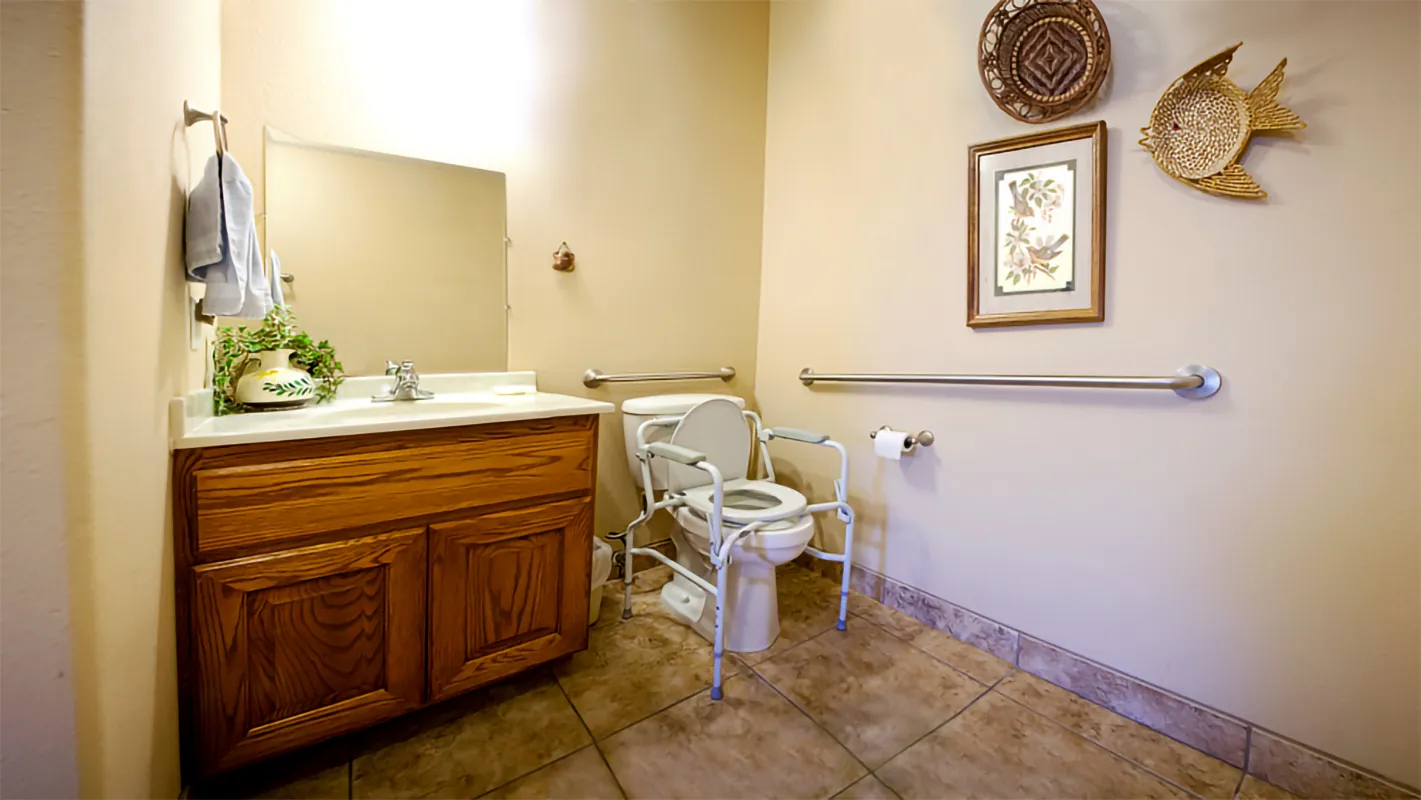
Hallways tend to be much shorter. Ranges in between bedroom, restroom, and dining area are less intimidating. For somebody with arthritis or mild heart failure, that can mean the difference in between strolling independently and requiring a wheelchair. Restrooms can be personalized more tightly to the resident's needs: get bars positioned to match an individual's height and dominant hand, shower heads lowered or portable, shelving arranged so preferred items are always in arm's reach.
Lighting and noise levels matter more than a lot of households understand. In a smaller, quieter area, a resident can much better hear a caretaker's spoken cues: "Slide your hand along the rail. Great. Now lean forward simply a little." That improves both safety and confidence.
I checked out a 10-bed home where personnel noticed one resident regularly declined night showers. Rather than chalk it as much as "behaviors," they focused. The corridor to the restroom was dim; her room was brilliant. They added a warm, continuous light along the course and a nightlight in the bathroom. Within a few days, her resistance softened. It was not about stubbornness. It was about depth perception and fear of falling in low light.
Boutique settings can make small, rapid modifications like this without a committee conference or a six-month capital strategy. That responsiveness appears in ADL performance.
Staff Relationships and the Power of Familiarity
ADLs are intimate. Helping an individual bathe, toilet, gown, or manage incontinence requires trust. In big neighborhoods where personnel turnover is high, residents might see a carousel of unknown faces. For someone with dementia or anxiety, that is a major barrier to accepting help.
In numerous store homes, the staff is smaller, and schedules are more predictable. A resident may see the very same caretaker 3 or four days each week, on the exact same shift. Familiarity grows, and with it, cooperation.
A resident who declines a shower from a brand-new aide might accept one from "Ana who understands my cream." A caretaker who has seen a resident through excellent and bad days can often anticipate what will assist on a rough morning: coffee initially, preferred music, a slower pace. That versatility assists maintain ADLs, since the resident remains participated in the process rather of pulling away or shutting down.
For staff, having an intimate understanding of "their" residents likewise improves medical judgment. A caretaker observing that a normally consistent walker is suddenly unsteady can flag a possible urinary tract infection or medication problem early, long before a fall.
Individualized Routines Rather of Institutional Timetables
Rigid schedules are effective for buildings, not necessarily for bodies. People do not age into harmony. Some have actually constantly bathed at night, others very first thing in the early morning. Some require time to get up slowly before any needs are made.
Large assisted living operations typically need to cluster showers and dressing support into narrow time windows to cover everyone. Store homes can stagger routines.
I dealt with a small home that had a resident who had actually constantly been a late sleeper. In her previous larger neighborhood, personnel woke her at 6:30 a.m. For "early morning care" because that is how the task sheets were structured. She became upset, yelled, struck out, and was labeled as having "tough habits."
In the store home, personnel agreed to leave her undisturbed until 8:30 or 9, then provide breakfast in her room if she wished. Within a week, the "behaviors" had practically vanished. She still needed assistance with dressing and bathing, however she accepted it calmly and cooperatively. Her ADL scores did not magically improve, however her capability to take part in her care did, and that is critical.
Boutique homes can also bend meal times, toileting schedules, and activity windows to match individual routines. For ADLs, that indicates tasks are done when the resident is at their best, not when the structure requires it.
Supporting Mobility Instead of Changing It
One of the greatest geological fault in between settings is how they deal with mobility. For personnel in a rush, a wheelchair is tempting. It feels faster and safer. Yet shifting a person prematurely to a wheelchair, or overusing it, is among the quickest routes to losing the capability to walk.
In the much better store homes, you see an extremely purposeful philosophy: maintain and utilize whatever movement exists, even if it takes time. Staff walk along with locals, not in front of them pressing. They integrate movement into everyday life rather than confining it to "exercise class."

Examples from practice:
A resident who is unsteady on irregular surface areas goes outside daily anyway, but just on a carefully chosen path, with a gait belt and close guidance. A guy who always liked to "fix things" is welcomed to help bring light tools or hold a flashlight when minor repair work are done, offering him purposeful walking.
That sort of integration matters more than a scheduled 30-minute workout. ADLs like moving, toileting, and dressing all depend upon leg strength, balance, and confidence to move. By keeping mobility part of real life, shop homes extend those capacities.
When formal rehabilitation is included, such as after hip surgery or stroke, a small setting can typically collaborate more seamlessly with physical and physical therapists. Personnel get useful training at the bedside: where to stand during transfers, what type of verbal cueing is advised, how much assistance to offer and when to keep back. This tight feedback loop improves carryover into ADLs.
Bathing, Dressing, and Grooming With Dignity
Bathing is frequently the hardest ADL for families to manage at home, and the one they most dread handing over to complete strangers. In practice, how a home deals with bathing informs you a great deal about its culture.
In a store environment, it is much easier to do the following:
Limit the variety of various caretakers who assist a resident in the shower, to construct trust. Change the rate to the individual's anxiety level, even if that implies spreading bathing jobs over two shorter sessions instead of one long one. Usage personal preferences: water temperature level, specific soaps, whether the individual likes to clean their own hair or have it provided for them.
Dressing and grooming follow the very same pattern. Smaller homes are most likely to respect a person's clothes style instead of push everybody into elastic-waist trousers and zip-up jackets "for usefulness." For some homeowners, having the ability to select a tie, a piece of jewelry, or a particular sweater is more than vanity. It is continuity of self.
I remember a retired instructor with mild dementia whose family was amazed at how well she continued to gown and groom herself in a 12-bed setting. The factor was not complicated. Staff set up her clothing in the same order, in the very same drawer, at the very same time each day, and cued her step by step, without hurrying. In her previous larger setting, personnel had frequently simply dressed her to conserve time. The distinction was not the building. It was the time and attention.
Nutrition and Mealtime as ADL Support
Eating is technically an ADL, but it is likewise a social event, a cultural ritual, and a major chauffeur of physical health. Shop senior care homes can turn mealtime into active assistance for independence rather than passive feeding.
Smaller dining spaces reduce sound and confusion, which assists residents with dementia focus on the task of eating. Personnel can sit with residents, not simply flow, and give gentle triggers: "Here is your fork. Attempt a bite of the chicken." Menus can be adjusted quickly. If personnel notice that three residents regularly leave most of the meat, they can change textures or gravies without a bureaucracy.
For homeowners who battle with great motor abilities, smaller homes can try out different plate rims, adaptive utensils, or finger-food versions of the very same meals. The goal is to keep the resident feeding themselves as long as possible, with peaceful, behind-the-scenes adaptation rather than overt "unique treatment" that might feel infantilizing.
Hydration is another subtle ADL support. In a boutique setting, staff typically understand who chooses iced water, who drinks more if the cup has a straw, and who will only drink tea if it is made a particular method. Those personal details impact kidney function, blood pressure, and fall risk.
Social and Emotional Layers of ADLs
You can not separate ADLs from mood. An individual who is lonesome or depressed often dislikes bathing, grooming, or perhaps consuming. A smaller, more relational home can capture and deal with those psychological shifts faster.
Familiar personnel notification when someone withdraws from normal routines. That might be the resident who always liked to sit by the window now staying in bed, or the woman who enjoyed having her hair curled all of a sudden saying "do not trouble." In a store home, personnel often have time to sit and ask concerns, or at least alert a nurse or social employee, instead of dealing with the change as simple stubbornness.
Group size also affects social comfort. Some citizens discover large activity spaces and big-group occasions frustrating. They might avoid them and become labeled as "not participating." In a boutique senior care home, activities can be smaller and more spontaneous. Two homeowners folding laundry together, or one helping to shell peas in the kitchen, can be more meaningful than a set up bingo hour.
That sense of belonging feeds back into ADLs. People are more happy to get dressed, groomed, and come to the table when they know they will see familiar faces and feel useful, not simply be parked in front of a television.
Where Shop Houses Excel Compared With Large Assisted Living
Large assisted living neighborhoods are not inherently poor options. They frequently have strong clinical resources, on-site therapy, and a wider range of structured activities. The question is fit.
For ADL support, shop homes tend to outperform in a couple of useful methods:
- Staff-to-resident ratios are frequently higher, so caretakers can offer more individually time for bathing, dressing, toileting, and movement, which preserves capabilities longer.
- Routines are more flexible, so citizens can shower, eat, and sleep at times that match their lifetime practices, which lowers resistance and improves cooperation.
- Physical layouts are simpler and ranges much shorter, which makes walking, toileting, and discovering one's room or the dining location easier, particularly for those with dementia.
- Relationships are more steady and familiar, which increases trust and minimizes anxiety around intimate care like bathing and toileting.
- Small adjustments can be made rapidly, such as modifying restrooms, seating, or meal arrangements for one person, without having to revamp a whole unit.
Families weighing a larger assisted living facility versus a shop senior care home ought to not only compare facilities. They must ask, really directly, how this location will keep their loved one walking, consuming, grooming, and utilizing the bathroom as independently and securely as possible.
The Function of Shop Homes in Respite Care
Not every family is looking for long-lasting positioning. Often the instant requirement is breathing room: a partner who has actually been supplying 24-hour elderly care requirements surgery, or an adult kid caretaker is burning out and requires a short reset.
Short-term respite care in a boutique home can be important in two instructions. The caregiver gets a break, and the older adult gains exposure to a structured environment that actively supports ADLs.
During a two or four week respite stay, personnel can frequently:
Re-establish safe bathing regimens that have slipped at home. Enhance toileting schedules and address constipation or incontinence. Get eyes on mobility issues, maybe involve a therapist, and send the resident home with a better plan for transfers and walking.
Families sometimes report that their loved one returns from respite "doing much better" with daily tasks than in the past. That is generally not magic. It is merely the impact of consistent cueing, practiced transfers, and constant nutrition and hydration.
Respite stays are likewise a low-commitment method to evaluate a store home as a possible future alternative. Viewing how staff support ADLs throughout a brief stay can tell you a good deal about what longer-term life there would look like.
Trade-offs, Expense, and Sensible Expectations
Boutique senior care homes are not the ideal fit for every scenario. Trade-offs are real.
Cost can be greater per resident than in big assisted living facilities, particularly in metropolitan markets where home worths are high. Some shop homes are private pay just, with minimal approval of long-term care insurance or Medicaid waivers.
Clinical resources differ. A smaller home might not have on-site nurses 24/7 or instant access to rehab services. For locals with intricate medical needs, such as frequent IV medications or innovative ventilator assistance, a skilled nursing center might be more appropriate in spite of its more institutional feel.
Even in strong boutique homes, not every ADL can be totally preserved. Progressive dementias, severe persistent diseases, and frailty will eventually minimize independence, no matter how excellent the care. What households can fairly hope for is a slower, gentler trajectory of decline, less crises, and more dignity in the process.
Part of the expert role in senior care is to assist families set expectations. A shop setting can improve safety and lifestyle, however it can not bring back a level of function that the person has clearly lost. The focus is typically on preserving what stays, compensating wisely where required, and preventing compounding harm by doing too much for the resident too soon.
What to Ask When Examining a Boutique Senior Care Home
Tours tend to highlight design and social shows. To understand how a home supports ADLs, you need more pointed questions. Utilized together, the following short checklist can help:
- Ask for specific staff-to-resident ratios on days, nights, and nights, and the length of time the typical caregiver has worked there, to assess stability and capacity for one-on-one ADL support.
- Observe bathrooms and bed rooms for customized setup: grab bars, adaptive devices, clothes organization, and proof that spaces are customized to people instead of standardized.
- Ask how they manage a resident who refuses a shower or resists toileting, and listen for nuanced, person-centered methods instead of talk of "compliance."
- Inquire about partnership with physical and occupational therapists after hospitalizations, and how treatment recommendations are incorporated into daily care.
- Speak straight with caretakers, not simply administrators, about how they help homeowners walk, transfer, consume, and dress; frontline staff will reveal the real culture.
If the answers are unclear or greatly scripted, that is an indication. Residences that truly focus on ADLs can talk concretely about how their routines vary from a more institutional assisted living design, and they can use particular examples without revealing private details.
Bringing All of it Together
The core promise of any senior care setting, whether identified assisted living, memory care, or residential care, is that standard day-to-day requirements will be fulfilled reliably and respectfully. Store senior care homes make that guarantee in a specific method: through small scale, close relationships, and an environment that bends to the individual, not the other method around.
For households, the decision is hardly ever simple. Yet when you remove away marketing language and facilities, one concern typically cuts through the sound: Where is my loved one more than likely to continue bathing, dressing, walking, consuming, and handling the information of daily life in such a way that seems like them?
For many older grownups, especially those overwhelmed by large crowds or rigid schedules, a thoughtfully run boutique senior care home is a strong answer.
BeeHive Homes of Taylor Ranch provides assisted living care
BeeHive Homes of Taylor Ranch provides memory care services
BeeHive Homes of Taylor Ranch provides respite care services
BeeHive Homes of Taylor Ranch supports assistance with bathing and grooming
BeeHive Homes of Taylor Ranch offers private bedrooms with private bathrooms
BeeHive Homes of Taylor Ranch provides medication monitoring and documentation
BeeHive Homes of Taylor Ranch serves dietitian-approved meals
BeeHive Homes of Taylor Ranch provides housekeeping services
BeeHive Homes of Taylor Ranch provides laundry services
BeeHive Homes of Taylor Ranch offers community dining and social engagement activities
BeeHive Homes of Taylor Ranch features life enrichment activities
BeeHive Homes of Taylor Ranch supports personal care assistance during meals and daily routines
BeeHive Homes of Taylor Ranch promotes frequent physical and mental exercise opportunities
BeeHive Homes of Taylor Ranch provides a home-like residential environment
BeeHive Homes of Taylor Ranch creates customized care plans as residents’ needs change
BeeHive Homes of Taylor Ranch assesses individual resident care needs
BeeHive Homes of Taylor Ranch accepts private pay and long-term care insurance
BeeHive Homes of Taylor Ranch assists qualified veterans with Aid and Attendance benefits
BeeHive Homes of Taylor Ranch encourages meaningful resident-to-staff relationships
BeeHive Homes of Taylor Ranch delivers compassionate, attentive senior care focused on dignity and comfort
BeeHive Homes of Taylor Ranch has a phone number of (505) 302-1919
BeeHive Homes of Taylor Ranch has an address of 6004 Whiteman Dr NW, Albuquerque, NM 87120
BeeHive Homes of Taylor Ranch has a website https://beehivehomes.com/locations/taylor-ranch/
BeeHive Homes of Taylor Ranch has Google Maps listing https://maps.app.goo.gl/VjePfgdypFLUTXAZ6
BeeHive Homes of Taylor Ranch has Instagram page https://www.instagram.com/beehivealbuquerquewest
BeeHive Homes of Taylor Ranch has an TikTok page https://www.tiktok.com/@beehivehomesalbuq
BeeHive Homes of Taylor Ranch has an YouTube page https://www.youtube.com/@hamiltonshives4468
BeeHive Homes of Taylor Ranch won Top Assisted Living Homes 2025
BeeHive Homes of Taylor Ranch earned Best Customer Service Award 2024
BeeHive Homes of Taylor Ranch placed 1st for Senior Living Communities 2025
People Also Ask about BeeHive Homes of Taylor Ranch
What is BeeHive Homes of Taylor Ranch Living monthly room rate?
Our base rate is $6,900 per month. We do an assessment of each resident's needs prior to move-in, so each resident's rate may be slightly higher. However, there are no "a la carte" charges or hidden fees. We do charge a one-time community move-in fee of $2,000
Does Medicare or Medicaid pay for a stay at Bee Hive Homes?
Medicare pays for hospital and nursing home stays, but does not pay for assisted living as a covered benefit. Some assisted living facilities are Medicaid providers, but we are not. We accept private pay, long-term care insurance, and we can assist qualified Veterans with approval for the Aid and Attendance program
Do we have a nurse on staff?
We do have a nurse on contract who is available as a resource to our staff but our residents' needs do not require a nurse on-site. We always have trained caregivers in the home and awake around the clock
What can you tell me about the food at Bee Hive?
You have to smell it and taste it to believe it! We use dietitian-approved menus with alternates for flexibility, and we can accommodate needs for different textures and therapeutic diets. We have found that most physicians are happy to relax diet restrictions without any negative effect on our residents
Do we allow pets?
We do allow small pets as long as the resident is able to care for them. State regulations also require that we have evidence of current immunizations for any required shots
Where is BeeHive Homes of Taylor Ranch located?
BeeHive Homes of Taylor Ranch is conveniently located at 6004 Whiteman Dr NW, Albuquerque, NM 87120. You can easily find directions on Google Maps or call at (505) 302-1919 Monday thru Sunday: 10:00am to 7:00pm
How can I contact BeeHive Homes of Taylor Ranch?
You can contact BeeHive Homes of Taylor Ranch by phone at: (505) 302-1919, visit their website at https://beehivehomes.com/locations/taylor-ranch/ or connect on social media via Instagram Facebook or TikTok
Conveniently located near BeeHive Homes of Taylor Ranch Flix Brewhouse Albuquerque Coors a great movie theater with full food & drink menu. Catch a movie and enjoy some great food while you wait.